In this article
- Why does a public adjuster scope differ from an initial carrier or contractor estimate?
- How should you structure a supplement when the carrier estimate falls short?
- Which technical Xactimate line items trigger pushback and how do you justify them?
- Why does photo documentation settle scope disputes faster than debating numbers?
- How do you move from field measurements to a carrier-ready ESX file without manual data entry?
- How Storm Xactimate handles this for you
- Frequently asked questions about public adjusters and contractor estimates
A licensed public adjuster represents the policyholder to evaluate coverage, document total loss, and negotiate claim settlements. Under guidelines from agencies like the Florida Department of Financial Services, they interpret policy language to maximize the homeowner's payout. A contractor estimate does something entirely different: it details the physical labor, materials, and code requirements needed to restore the structure. When you write a construction scope, you are pricing squares (SQ), linear feet (LF), starter strips, drip edge, and steep charges. You are pricing the build, not arguing policy limits.
Roofers cannot legally negotiate policy coverage or act as public adjusters. Instead, you document physical damage and mandatory building codes in Xactimate to show carriers the true cost of construction. Delivering a carrier-ready ESX file backed by local price lists eliminates friction for desk adjusters and public adjusters alike, giving all parties the hard data required to settle the file. Source: Storm Xactimate.
Why does a public adjuster scope differ from an initial carrier or contractor estimate?
Scopes written by carrier adjusters, public adjusters, and roofers rarely match after a storm. Carrier adjusters often write baseline scopes using automated macros. They sketch the roof, run the software, and spit out bare-minimum line items that overlook local building codes, steep charges, and tear-off difficulties. Their estimate creates a low undisputed baseline, leaving it up to the roofer to justify the actual labor and materials required.
Public adjusters take a broader view. They evaluate policy limits across the entire structure, folding interior drywall damage and personal property loss into the same claim as the roof. A roofing contractor's estimate focuses strictly on the work sequence required to restore the roof system: tear-off, laminated shingles, underlayment, valley ice and water barriers, custom flashing, and ridge caps.
Liability separates the contractor from everyone else. You are legally responsible for building the roof to code. Under Florida Building Code Section 1507, for instance, components like underlayment, flashing, and drip edge are legal mandates. If a desk adjuster omits them, you absorb the financial loss or build an illegal roof. You cannot leave off code-required materials just because an initial insurance scope ignored them.
How should you structure a supplement when the carrier estimate falls short?
Building an airtight supplement requires clean data, not angry emails. Never delete or overwrite the carrier's original estimate lines in Xactimate. Build a line-by-line comparison instead. By highlighting where the initial scope omitted items or miscalculated quantities, the desk adjuster can immediately spot the variance between their initial Actual Cash Value (ACV) and Replacement Cost Value (RCV) figures and your updated total.
Organize the supplement by trade sequence, following Xactware / Verisk standard component breakdown definitions:
- Tear-off and deck preparation
- Perimeter details, including rake and eave drip edge
- Valley ice and water barrier alongside field underlayment
- Starter course and field shingles (factoring in pitch and cut waste)
- Ridge ventilation and ridge cap
Tie every added line item directly to physical proof. Pair your side-by-side scope comparisons with aerial measurement reports or numbered photos from the inspection packet. Always separate pure labor and material oversights, like an incorrect square count, from building code upgrades. When desk adjusters can verify the legal mandate behind an RCV increase, approvals happen faster.
Which technical Xactimate line items trigger pushback and how do you justify them?
Desk adjusters focus on high-frequency line items: starter strip, drip edge, valley lining, and Overhead and Profit (O&P). Knowing how to justify each in Xactimate prevents arbitrary reductions.
Adjusters frequently try to fold starter course (RFG STRT) into general shingle waste. Push back by explaining that starter is a distinct accessory with its own perimeter installation labor. Keeping cut waste calculations separate protects your waste percentage from being stripped out during review.
Drip edge (RFG DRIP) is standard code in hurricane zones. Support your perimeter linear footage with aerial measurement reports and cite explicit statutory mandates, such as Florida Building Code Residential Chapter 9, which requires metal edge flashing to stop wind-driven water intrusion. Back up ice and water barrier (RFG IWS) in valleys, transitions, and low-slope planes using local code requirements and technical guidance from the FEMA Roofing Fact Sheet series on high-wind attachment.
Overhead and Profit triggers the most resistance. O&P is never an automatic markup; it covers multi-trade management and project coordination. Justify 10 & 10 by detailing the complexity of the job. If your scope coordinates roof tear-off, interior drywall repair, and gutter replacement across multiple specialized subcontractors, document those supervisory demands clearly without inflating line items.
Why does photo documentation settle scope disputes faster than debating numbers?
Desk adjusters handle dozens of claims daily. They review photos; they skim long emails and ignore heated voicemails. Objective photo documentation settles scope discrepancies immediately. If you claim a 9/12 pitch or widespread delamination, the adjuster needs visual evidence to release the funds.
Follow National Roofing Contractors Association (NRCA) photographic assessment standards with a focused shot list:
- Four full-elevation building shots showing the complete property layout.
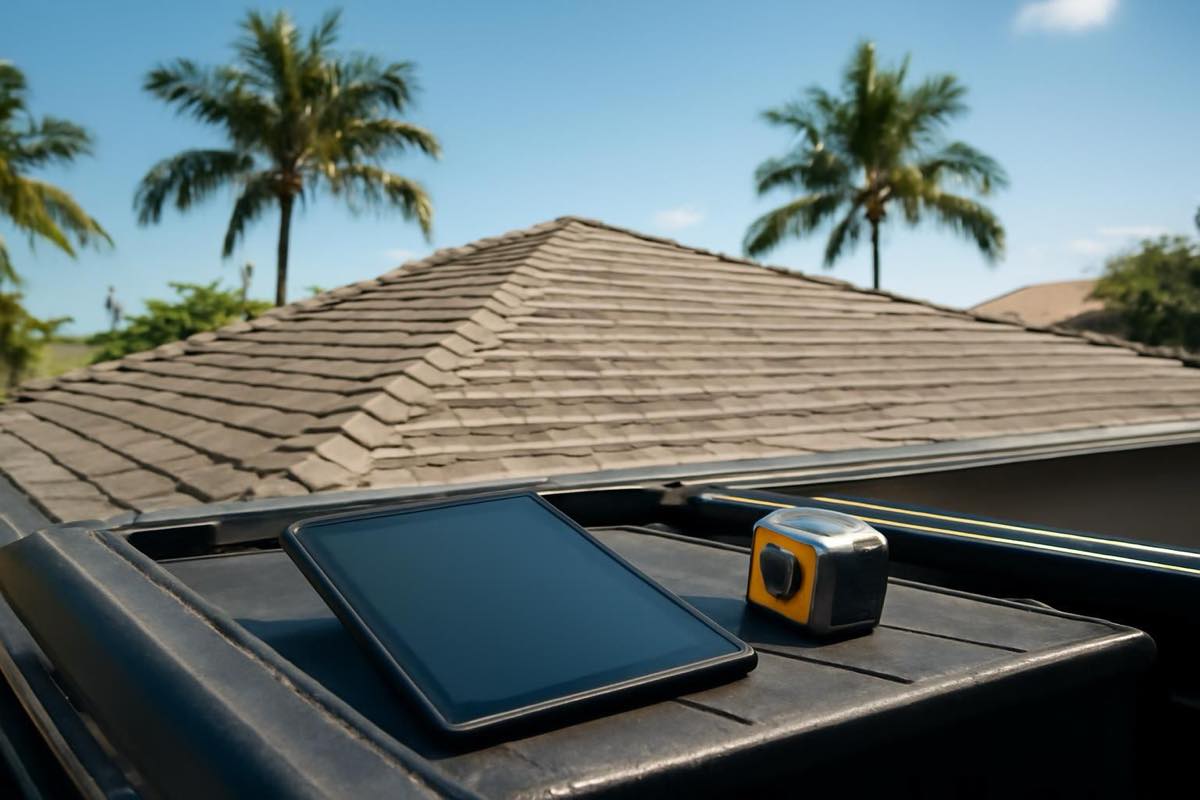
- Pitch-gauge readings resting on the roof deck.
- Shingle thickness and exposure measurements taken with proper gauges.
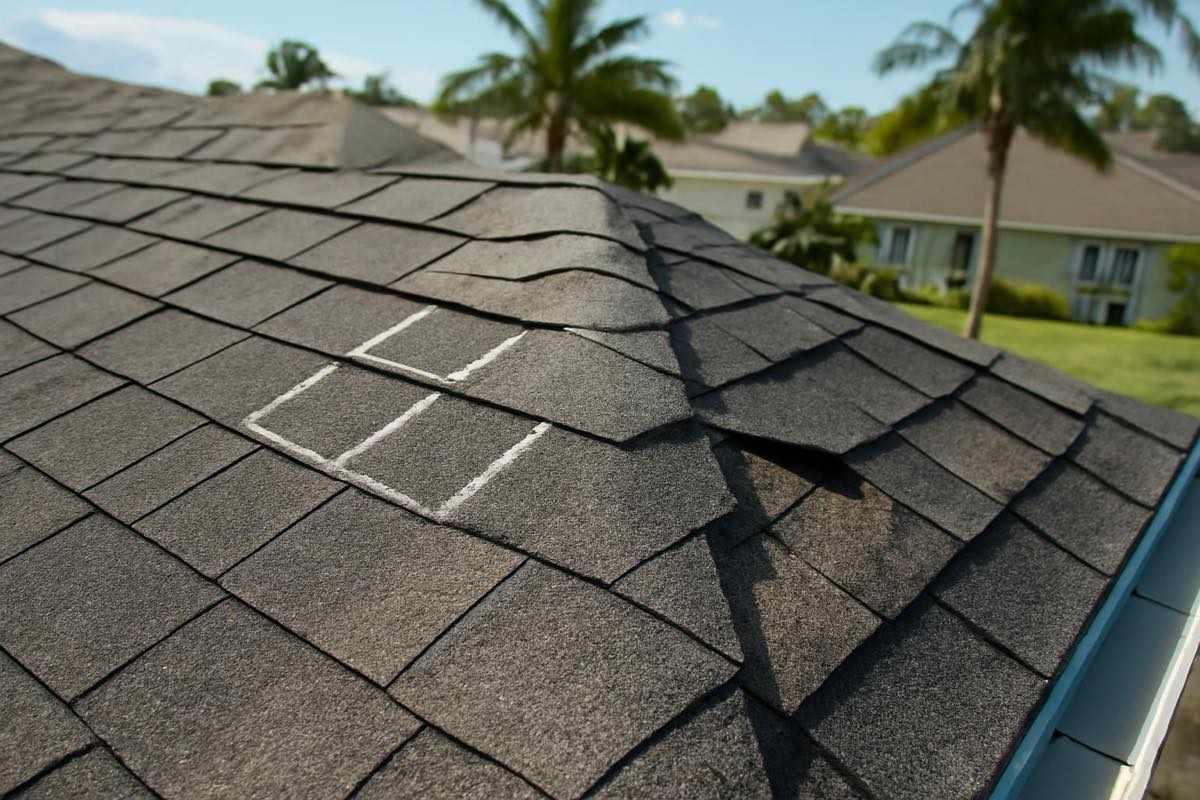
- Macro close-ups of hail strikes, wind creasing, or delamination.
- Drip edge condition, noting corrosion or missing metal.
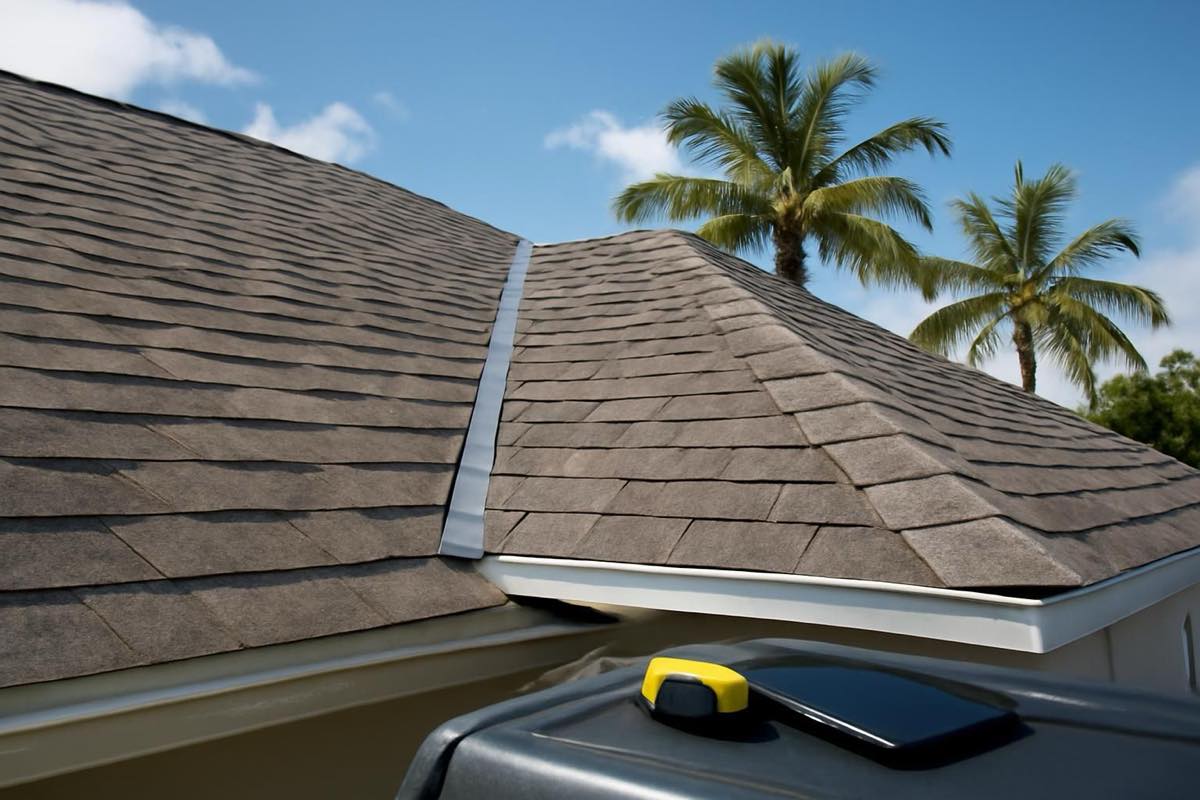
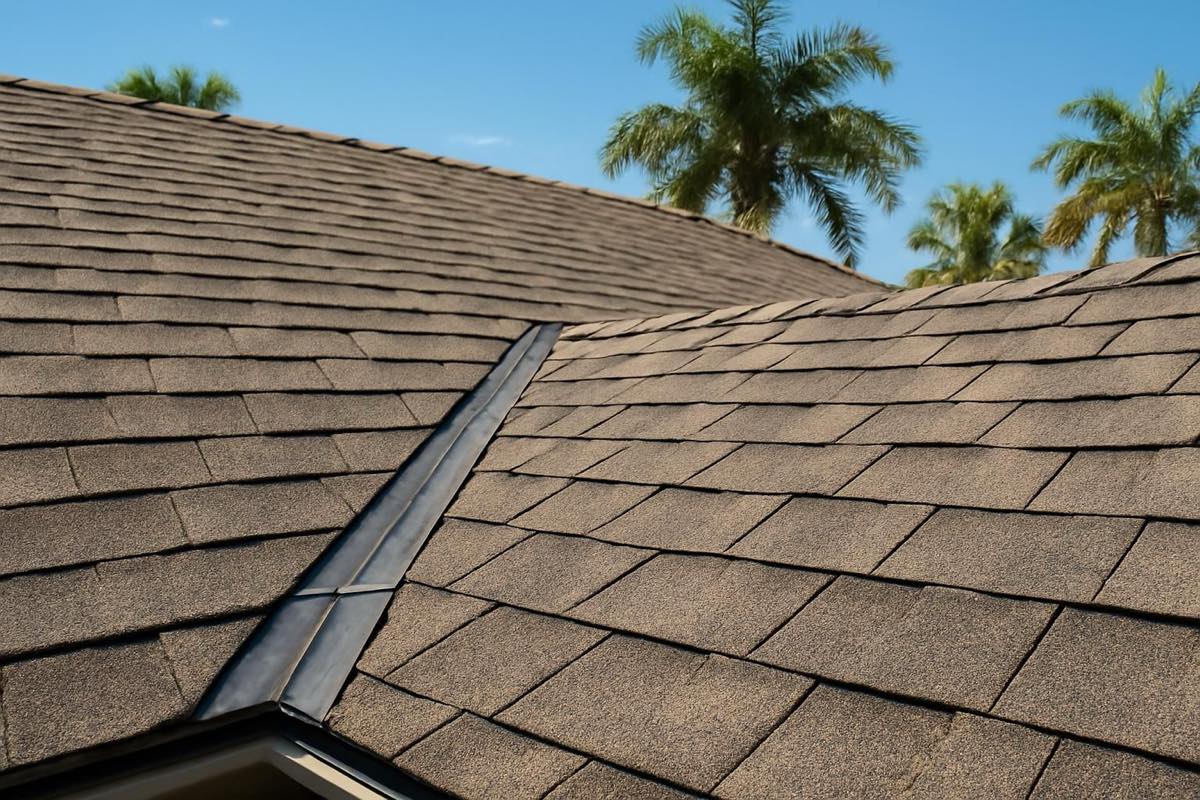
- Valleys, flashing, and roof-to-wall transitions.
Annotate your photos directly. Add text callouts with street orientations, slope labels, and arrows pinpointing damaged materials. When a desk adjuster opens a clearly annotated photo packet that mirrors the line items in your ESX file, they have the documentation required to approve the supplement.
How do you move from field measurements to a carrier-ready ESX file without manual data entry?
Hand sketches and manual data entry slow storm response to a crawl. Spending half your workday hand-drawing roof facets and crunching waste percentages keeps you chained to a desk when you should be signing contracts.
Modern workflows bypass manual drafting by feeding aerial roof measurements straight into Xactimate. Following Verisk aerial roof data integration standards, reports from EagleView, Hover, or GAF QuickMeasure export precise square counts, linear dimensions, roof pitches, and valley lengths. This data imports directly into an accurate, mathematically verified roof sketch tied to local price lists.
Speed wins claims. After a hurricane, the contractor who delivers a carrier-ready, error-free ESX file within 24 hours locks in approvals before adjusters hit maximum backlog. You avoid drafting errors, capture accurate local pricing, and hand the insurer a native file ready for instant review.
How Storm Xactimate handles this for you
Storm Xactimate builds carrier-ready Xactimate roof estimates for residential roofing contractors working post-storm repairs. You submit job details, smartphone site photos, and an aerial report if you have one. If not, Storm Xactimate includes the aerial roof measurement at no additional charge or delay.
An experienced estimator drafts the scope against the property's local price list. We incorporate necessary code items—drip edge, starter course, valley ice and water shield, and applicable O&P—reviewing every line against your documentation. We never add phantom items. The scope reflects only the storm damage confirmed in your photos and measurements.
Within 24 hours of a complete order, you receive a branded PDF estimate, the ESX file, roof CAD diagrams, and an organized photo packet showing your company name and logo. We operate on a credit-based, pay-per-estimate model: buy credits upfront and use them as claims come in. If an adjuster pushes back with a short scope, upload their estimate or denial letter within 30 days for one included supplement revision. Start an estimate with Storm Xactimate.
Frequently asked questions about public adjusters and contractor estimates
What is the downside of using a public adjuster? The contingency fee is the primary drawback for homeowners. Public adjusters take a percentage of the total claim payout, reducing the cash available to complete the actual roof replacement. Hiring one can also slow down claim resolution or create friction with the carrier. In many cases, an accurate, code-backed contractor estimate written in Xactimate clears up scope discrepancies directly, making formal representation unnecessary.
Can a public adjuster recommend a contractor? Yes, provided they comply with state ethics laws and conflict-of-interest regulations. Under NAIC (National Association of Insurance Commissioners) consumer guidelines, public adjusters must act as independent policyholder advocates. They cannot collect referral kickbacks or hold an ownership stake in the repair business. While adjusters frequently supply lists of qualified local roofers, homeowners maintain the right to hire whichever contractor they prefer.
Should I give an insurance estimate to a contractor? Yes. Sharing the carrier’s scope helps your roofer verify dimensions, identify omitted code upgrades, and build an accurate supplement. Without the baseline estimate, the contractor cannot see where the insurer cut costs or undercalculated quantities like squares and linear feet. Reviewing the initial paperwork allows the contractor to generate a side-by-side scope showing the desk adjuster exactly what was missed.
How much does a public adjuster usually cost? Public adjusters work on contingency, charging a percentage of the total claim payout or newly recovered funds. During declared states of emergency, state regulators strictly limit these fees. For example, the Florida Office of Insurance Regulation caps emergency fees to shield property owners from price gouging. Exact percentages depend on when the adjuster enters the process and local statutory limits, with the fee deducted straight from the claim settlement before contractors receive payment.
Sources
- Florida Department of Financial Servicesmyfloridacfo.com
- Florida Building Commissionfloridabuilding.org
- Verisk Xactware Estimating Solutionsxactware.com
- FEMA Roofing Fact Sheet Seriesfema.gov
- National Roofing Contractors Association (NRCA)nrca.net
- Storm Xactimatestorm-xactimate-app.vercel.app
- National Association of Insurance Commissioners (NAIC)content.naic.org
- Florida Office of Insurance Regulationfloir.com