In this article
- What code line items must Florida hurricane roof claims include?
- Why do carrier adjusters leave money off hurricane roof scopes?
- How do you translate storm inspection photos into an audit-ready Xactimate estimate?
- How should a roofing contractor write and document a storm damage supplement?
- How Storm Xactimate handles this for you
- Frequently asked questions about Florida hurricane roof claims
After a hurricane hits Florida, winning the re-roof contract comes down to paperwork speed. Adjusters move quickly. Homeowners panic. Take a week to turn around an estimate, and you lose the job. Securing an insurance approval at full Replacement Cost Value (RCV) requires a line-item estimate matching Florida Building Code (FBC) mandates—starter course, drip edge, valley metal, and self-adhering underlayment—priced in Xactimate against the regional price list.
Lump-sum bids and stripped-down scopes lead directly to underpaid claims and stalled production. Backing up physical storm damage with clear pitch-and-plane photos and precise aerial measurements turns a field inspection into a fully funded ESX file. Source: Storm Xactimate.
What code line items must Florida hurricane roof claims include?
Carriers rarely volunteer regional code upgrades. For claims subject to Florida's wind-borne debris regulations, contractors must explicitly document site conditions and bill the correct Xactimate items.
Under the Florida Building Code 8th Edition (2023) Building/Residential Chapter 9 (Roof Assemblies), residential scopes must reflect several defensive build requirements:
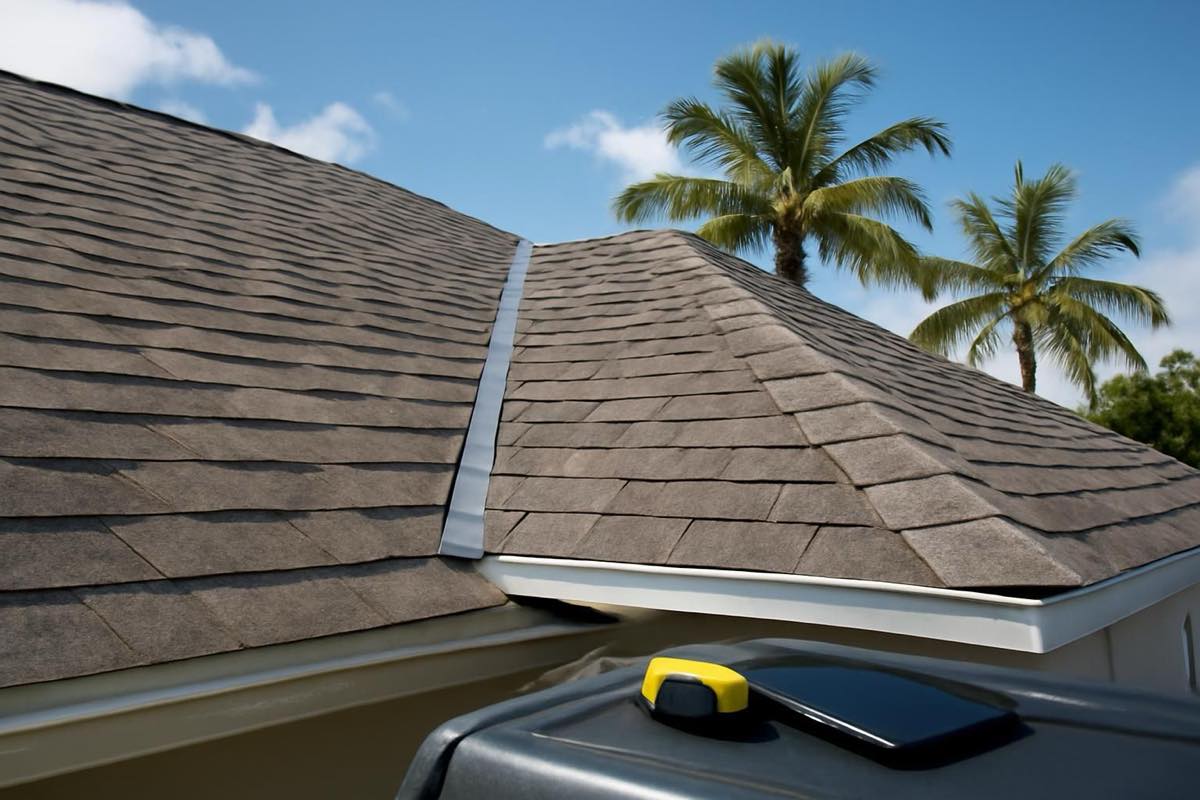
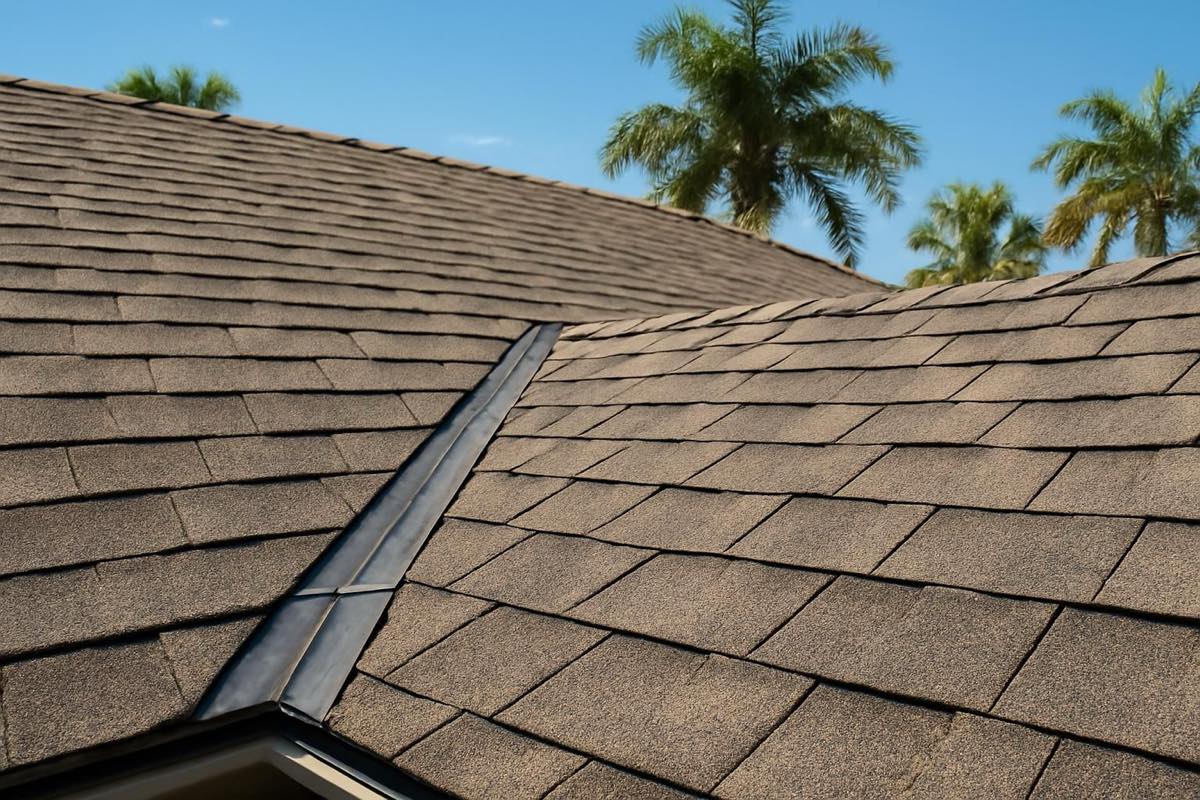
- Drip Edge (RFG DRIP): Code requires drip edge along all eaves and rakes.
- Secondary Water Barrier (RFG IWS): Sealed roof decks prevent water intrusion if primary shingles blow off. Scope this as ice and water shield or an approved self-adhering underlayment covering the entire deck or critical joints.
- Starter Strip (RFG ARLS): Desk adjusters regularly fold starter course into general shingle waste. It belongs as an independent line item measured in linear feet (LF), never absorbed into field squares (SQ).
- Steep Charges (RFG STEEP): Slopes of 7/12 or greater introduce slower, hazardous working conditions that require steep labor surcharges.
Pay close attention to the 25% roof rule outlined in Florida Statute § 553.844. When wind damage forces repairs exceeding 25% of an older, non-compliant roof section, building officials mandate that the entire section be brought up to current code.
Why do carrier adjusters leave money off hurricane roof scopes?
Catastrophe (CAT) adjusters handle dozens of property files a day during a storm surge. To keep moving, they rely on pre-built software macros. These quick templates cut corners, routinely stripping out the localized Florida building details necessary to return a structure to pre-loss condition.
Waste calculations are the first casualty. Adjusters frequently calculate shingle quantities based on flat, nominal surface area rather than true geometric waste. On a roof with hips, valleys, and dormers, that omission is disastrous. Without factoring in cut waste, your crew will run out of bundles before reaching the ridge cap.
Overhead and Profit (O&P) faces similar pushback. While standard 10 & 10 (10% overhead, 10% profit) applies to multi-trade coordination or severe job-site access hurdles, initial carrier estimates rarely include it. Securing it requires thorough job-site documentation showing project complexity—without crossing into policy interpretation or acting as a public adjuster.
Remember how money flows through an insurance payout: the carrier cuts an initial Actual Cash Value (ACV) check reflecting depreciation, holding back the balance until final invoicing. Missing line items like drip edge, starter strip, or pitch charges lower the base estimate, dragging down the total recoverable Replacement Cost Value (RCV) and shrinking your margins. Review standard fee structures in the pricing section.
How do you translate storm inspection photos into an audit-ready Xactimate estimate?
Carriers do not approve line items on trust; they demand visual proof. Your field crews need a standardized photo checklist before leaving the property:
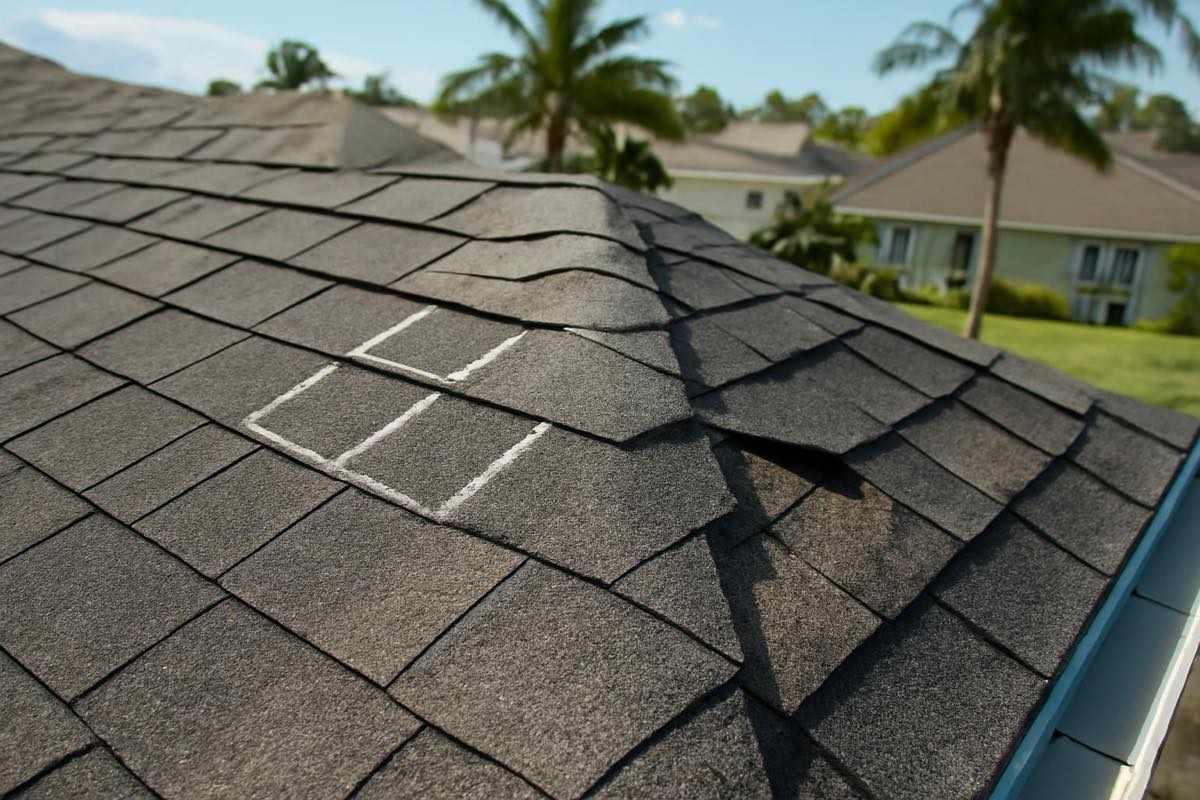
- 10x10 Test Squares: Chalked out on damaged slopes, marking every creased, torn, or missing shingle.
- Pitch Gauges: Clear, directional photos showing the gauge resting on the roof deck to validate steep fees.
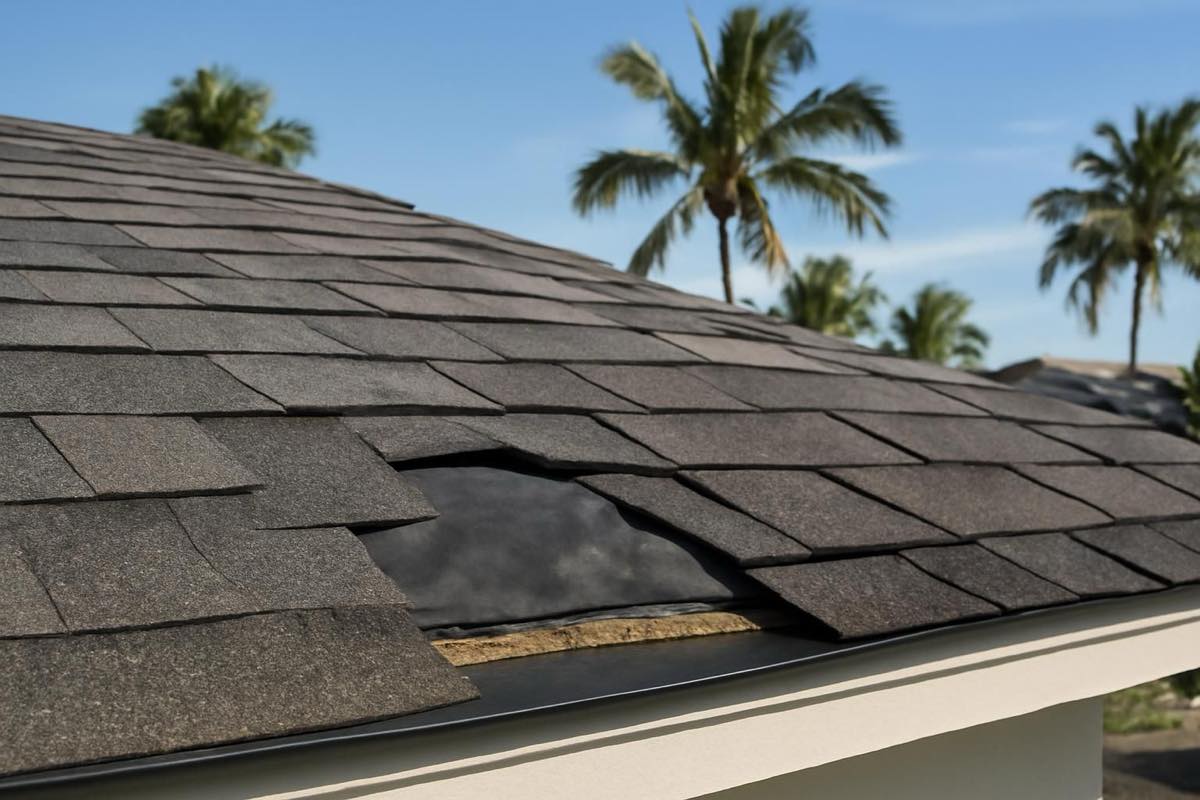
- Tab Adhesion: Close-ups showing broken seal strips and wind-lifted tabs.
- Elevation and Access: Wide shots showing perimeter hazards, multi-story drops, landscaping, or tight property lines that impede staging.
Pair these photos with certified aerial reports from EagleView, Hover, or GAF QuickMeasure. Certified reports remove arguing over surface area. Once an adjuster sees third-party totals for squares, valleys, and rakes, they cannot arbitrarily shave square footage in their software.
Next comes pricing. Formatting the ESX file against current Verisk regional price lists ensures labor and material line items reflect current local post-storm supply costs.
For growing roofing outfits, the true hurdle is capacity. If your sales reps sign ten contracts a day but nobody is in the office writing ESX files, production halts. Jobs drag out, homeowners grow impatient, and local competitors take the work.
How should a roofing contractor write and document a storm damage supplement?
When an adjuster misses required code items or undercounts dimensions, you need a line-by-line reconciliation. Put the carrier's statement of loss next to your ESX estimate. Flag the gaps immediately: missing starter course, shorted valley metal, or unaccounted ridge cap.
Tear-off operations regularly hide unexpected expenses. Adjusters routinely budget for a straightforward, single-layer removal. If stripping the roof uncovers rotted decking, a hidden second layer of felt, or baked-on underlayment that doubles tear-off labor, stop and photograph it immediately. Without mid-tear-off photos, carriers will deny the supplement.
Stay firmly within state regulatory boundaries during every communication. Under Florida Department of Financial Services (DFS) guidelines (F.S. § 626.854), contractors must focus purely on construction realities and physical damage. Discuss scopes, materials, and code mandates. Never advise homeowners on coverage, never negotiate claim settlements, and never act as an unlicensed public adjuster.
Watch your deadlines. Aim to submit supplements within a tight 30-day window after receiving the initial scope. Ironing out scope differences before tearing off the first shingle keeps cash flow intact and crews moving.
How Storm Xactimate handles this for you
Storm Xactimate creates carrier-ready estimates for roofing contractors tackling the 2026 Florida hurricane season without the overhead of a dedicated estimating department.
You upload your job details, phone photos, and an aerial report from EagleView, Hover, or GAF QuickMeasure. Missing a report? Storm Xactimate orders it for you—the measurement is included. An experienced estimator reviews your file, maps your photos to localized Verisk price lists, and integrates required FBC line items like drip edge and starter strip wherever documented.
Turnaround takes 24 hours. You receive an estimate PDF branded with your company name and logo, the raw ESX file, roof diagrams, and an indexed photo schedule. When an adjuster pushes back or sends an incomplete initial summary, upload their scope within 30 days of delivery. Storm Xactimate includes one complete revision or supplement round to keep production moving. Start an estimate with Storm Xactimate.
Frequently asked questions about Florida hurricane roof claims
What is the time limit for storm damage roof claims in Florida? Under Florida Statute § 627.70132, policyholders must meet strict notice deadlines. For hurricanes or windstorms, an initial claim or reopened claim must be submitted to the carrier within one year of the hurricane's landfall. Supplemental claims must be filed within 18 months.
What is the 25% roof rule in Florida? The 25% rule, referenced in the Florida Building Commission / FBC Existing Building Volume and F.S. § 553.844, states that if more than 25% of a roof section is repaired or replaced within a 12-month period, the entire roof section must be brought up to current code. The primary exception applies if the roof was already built in compliance with the 2007 FBC or a later edition.
Does homeowners insurance cover roof damage from hurricanes? Yes, standard HO-3 policies typically cover direct physical wind damage. However, Florida policies carry specific hurricane deductibles rather than standard windstorm deductibles. The insurance carrier covers the direct physical damage to the property minus the homeowner's percentage-based hurricane deductible.
What should contractors keep in mind when meeting the insurance adjuster on site? A roofing contractor must stick to presenting factual damage evidence. Point out lifted shingles, verify pitch, confirm square footage measurements, and reference structural code items. Avoid interpreting the homeowner's policy, waiving deductibles, or acting outside the bounds of a contractor's physical documentation role.
Sources
- Florida Building Code 8th Edition (2023) Building/Residential Chapter 9 (Roof Assemblies)codes.iccsafe.org
- Florida Statute § 553.844leg.state.fl.us
- Storm Xactimate Pricingstorm-xactimate.vercel.app
- Florida Statute § 626.854leg.state.fl.us
- Storm Xactimate Sign Upstorm-xactimate-app.vercel.app
- Florida Statute § 627.70132leg.state.fl.us
- Florida Building Commission / FBC Existing Building Volumecodes.iccsafe.org