In this article
- Does insurance cover code upgrades on a Florida roof claim?
- What are the current roofing codes in Florida that require line-item upgrades?
- What is the Florida Building Code's 25% roof replacement rule?
- How do you translate measurement reports into Xactimate code line items?
- How should a roofing contractor submit a supplement for missing code items?
- How Storm Xactimate handles this for you
- Frequently Asked Questions
Will insurance pay for Florida Building Code upgrades on a residential reroof? Yes—provided the policy includes Ordinance or Law coverage.
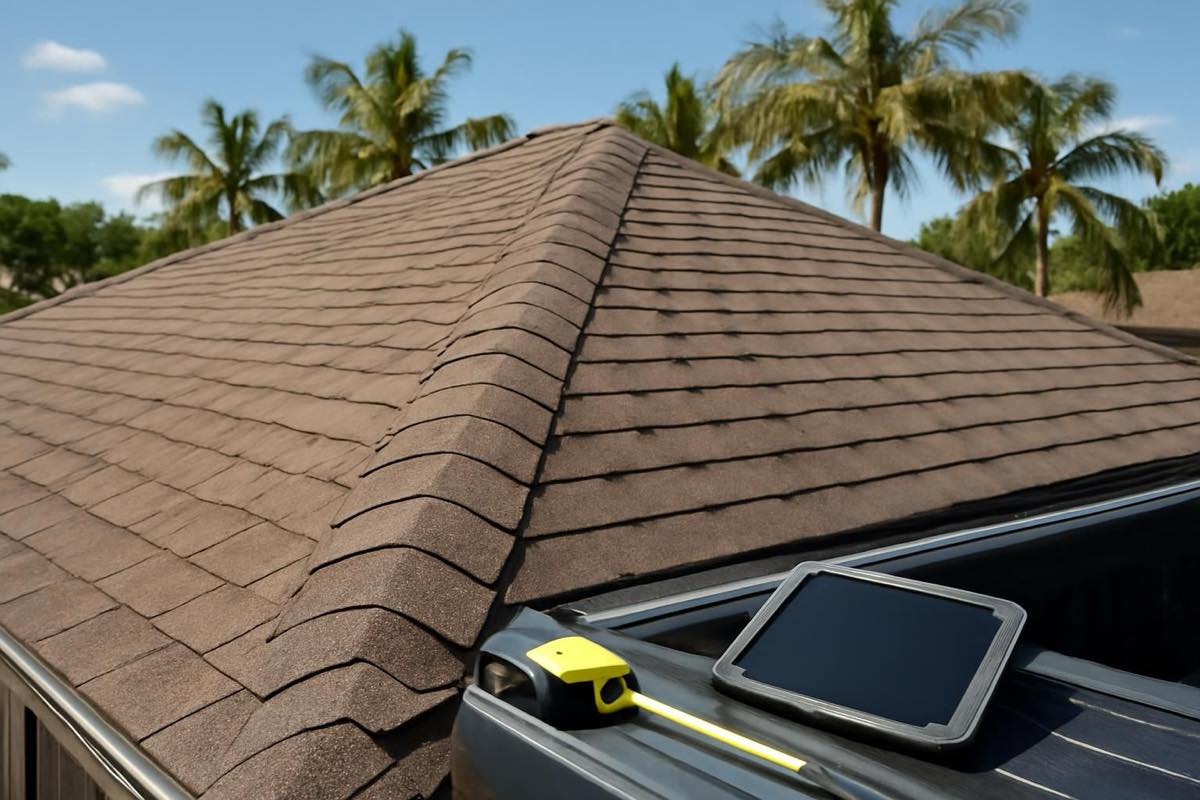
Getting adjusters to include those items, however, is a different story. They rarely add secondary water barriers, drip edge, or starter courses to an initial scope. Carriers write replacement cost value (RCV) estimates based strictly on pre-loss conditions, meaning they pay to replace what was there, not what current code mandates. To secure approval, a contractor must prove the necessity of each upgrade. That requires pairing precise field measurements and site photos with direct citations from the Florida Building Code. Source: Storm Xactimate.
Does insurance cover code upgrades on a Florida roof claim?
Getting code upgrades approved comes down to the difference between standard replacement cost value and Ordinance or Law coverage.
Standard RCV pays to restore a property to its pre-loss condition using materials of like kind and quality. If an older roof lacked a self-adhered secondary water barrier or a code-compliant drip edge, standard RCV will not cover adding them.
Upgrades require Coverage B: Ordinance or Law coverage. As noted by the Florida Office of Insurance Regulation, this endorsement covers the increased construction costs necessary to satisfy current building, repair, or zoning laws after a covered loss. Most homeowners carry an HO-3 policy that includes this endorsement as a set percentage of their dwelling limit.
Field adjusters inspect what is on the roof today. If an item isn't there, they leave it off the initial scope. They aren't looking ahead to permitting requirements; they are documenting pre-loss physical evidence. Because code requirements trigger only when a repair or replacement reaches specific thresholds, the burden of proof falls on the contractor. You must supply the measurements, the local code references, and an itemized estimate that shows why those upgrades are legally required. Without that documentation, carriers will not open the Ordinance or Law pocket.
What are the current roofing codes in Florida that require line-item upgrades?
Scoping an asphalt shingle reroof in 2026 requires a firm grasp of the current Florida Building Code (FBC). If code-mandated work is missing from an adjuster's scope, adjusters need line-item documentation to approve the revision:
- Secondary Water Barrier (Sealed Roof Deck): FBC Residential Chapter 9 and the Existing Building provisions mandate a sealed deck for residential reroofs. Contractors can satisfy this in one of two ways: install a full layer of self-adhering polymer-modified bitumen directly to the decking, or tape every deck seam with an approved polymer-modified bitumen tape before laying standard underlayment.
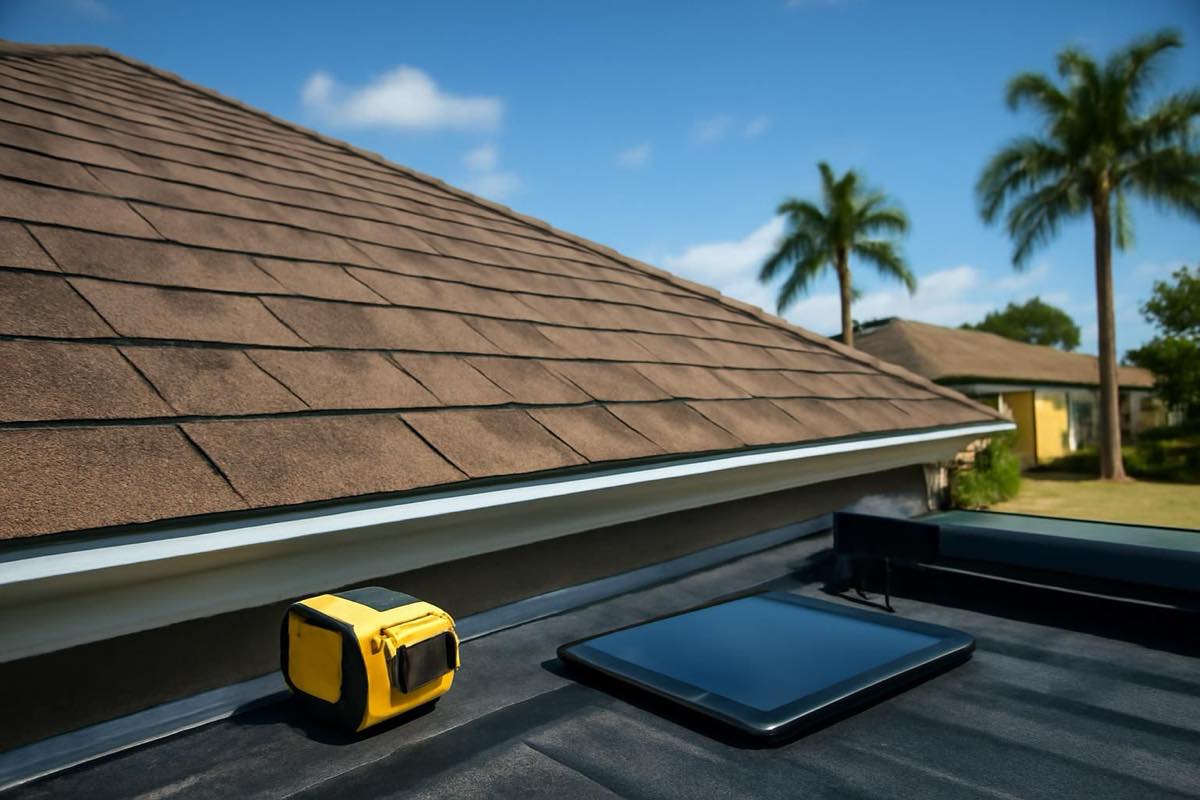
- Drip Edge: Modern code demands specific sheet metal gauges and a roof deck flange of at least 2 inches. It also enforces strict fastening schedules along eaves and rakes to resist high winds.
- Starter Strips and Valleys: Wind zones dictate fastening patterns and material choices, with High-Velocity Hurricane Zones (HVHZ) enforcing the strictest rules. Starter strips cannot be buried inside standard field shingle waste; they require a dedicated installation method, linear-foot measurements along the eaves and rakes, and their own line items.
What is the Florida Building Code's 25% roof replacement rule?
For years, Florida's 25% rule was clear-cut: if a repair touched more than a quarter of a roof system or section within a 12-month period, the entire system had to be brought up to current code—forcing a total replacement. Statutory revisions have since altered that dynamic.
Under Florida Statutes Section 553.844, an exception applies to roofs built, repaired, or replaced under the 2007 FBC or later editions. If an existing roof already satisfies those modern structural and wind-uplift standards, the law allows for partial repairs exceeding 25%, provided the repair itself meets code.
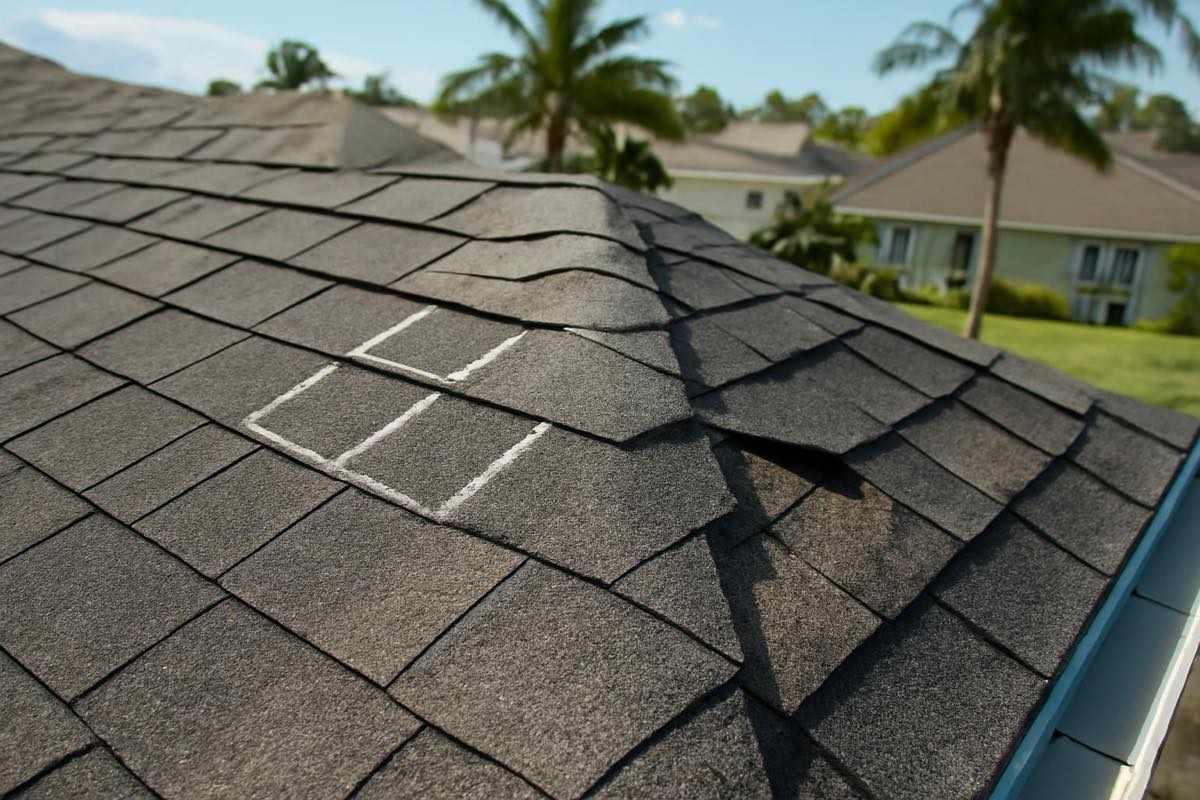
Context matters. When an adjuster writes a 4-SQ slope repair on a 30-SQ roof installed before the 2007 code took effect, the 25% rule can still force a full replacement. For newer roofs, you still need to evaluate real-world feasibility: Will adjacent shingles break during repair? Can you source a matching shingle? Does the interlocking system allow for a localized fix?
Always verify how the local building department interprets Section 553.844 before locking in your scope. Local building officials hold final permitting authority. State the physical facts, cite the statute, and let the jurisdiction's requirements direct the claim.
How do you translate measurement reports into Xactimate code line items?
Fast supplement approvals hinge on translating aerial reports—whether from EagleView, Hover, or GAF QuickMeasure—into exact Xactimate line items:
- Perimeter components: Pull the combined linear footage (LF) of eaves and rakes. Map this figure to
RFG DRIPorRFG DRIPG(painted). Because metal strips must overlap at joints, include standard overlap waste in your LF calculation or apply Xactimate's linear waste tool. - Valleys: Take the total valley LF and apply it to
RFG AVALfor the required self-adhered membrane. - Sealed roof decks: When meeting the mandate by taping deck seams, calculate the total roof area in squares (SQ). Apply this directly to the seam-tape line item, matching the net deck area.
- Starter courses: Run your combined eave and rake footage into
RFG STRPR(peel-and-stick starter) or a dedicated starter shingle item. Do not bury this in a 10% or 15% field shingle waste calculation. Starter course is a distinct material with distinct labor costs. Lumping it into waste cuts straight into your margin. - Pitch charges: Avoid blanket steep charges across the entire structure. Break out the actual squares for each pitch bracket (such as 7/12 to 9/12 or 10/12 to 12/12) and apply charges only where those slopes exist. Adjusters reject scopes that inflate pitch areas.
How should a roofing contractor submit a supplement for missing code items?
When an adjuster's initial scope misses required code items, skip the emotional arguments. Submit a clean, professional supplement built around verifiable physical requirements.
Start with a side-by-side comparison. Send a revised Xactimate estimate showing the carrier's baseline scope alongside your added line items. Back up every addition using Xactimate's F9 note tool:
- When adding
RFG DRIP, cite the exact FBC section governing metal gauge, flange size, and fastener spacing. - When adding a secondary water barrier, cite the FBC Existing Building chapter on sealed roof decks.
Line-item notes give adjusters the exact legal text they need to approve the revision for their managers.
Keep your communications brief and technical. Reference your aerial measurements, attach photos of the existing roof deck, and let the code do the talking. Clean math and clear evidence resolve supplements faster than arguments over policy language.
How Storm Xactimate handles this for you
Scoping code upgrades, building line items, and writing F9 notes takes hours—time better spent running crews or inspecting roofs. Storm Xactimate prepares carrier-ready residential roof estimates so you can stay in the field.
Send over your job notes, phone photos, and measurement report. If you don't have an EagleView, Hover, or GAF QuickMeasure report, Storm Xactimate orders one for you; measurements are included with the service.
Estimates are written in Xactimate using local, updated pricing. Every code-required item—from drip edge and valley membranes to starter strips—is included and supported by the project data. An experienced estimator reviews every file prior to delivery. Within 24 hours of receiving complete project details, you get an estimate package featuring your company branding, complete with roof diagrams, organized photos, and an estimate PDF. If the adjuster issues a pushback, you get one revision or supplement round included within 30 days.
Start an estimate with Storm Xactimate.
Frequently Asked Questions
Does insurance cover code upgrades?
Coverage applies only if the homeowner's policy includes an Ordinance or Law (Coverage B) endorsement. Even with coverage in place, adjusters will not add code items automatically. The contractor must document the existing conditions, supply accurate dimensions, and provide the relevant building code citations.
What not to say to a roof insurance adjuster?
Never debate policy interpretations, argue about coverage limits, or tell an adjuster what the carrier "must" pay. Florida law prohibits contractors from acting as public adjusters. Focus strictly on measurable damage, dimensions, manufacturer instructions, and building code mandates.
What line item is used for drip edge in Xactimate?
Use RFG DRIP (standard drip edge) or RFG DRIPG (painted drip edge). Both items are scoped in linear feet (LF) along eaves and rakes. Include roughly 10% waste to account for overlaps at joints and corners.
Can a contractor negotiate coverage limits for code upgrades?
No. Florida law prohibits unlicensed contractors from adjusting claims or negotiating policy terms. A contractor's scope is purely technical: record the damage, establish the physical scope of work required by the code, provide an itemized estimate, and supply supporting documentation to the carrier.