
In this article
- What is the difference between supplementing a roof claim and negotiating coverage?
- Why do carrier roof scopes consistently miss essential line items?
- How do you leverage aerial measurement reports to correct adjuster scope quantities?
- How do you build an Xactimate supplement packet that adjusters approve without pushback?
- What should you not say when talking to an insurance adjuster about a supplement?
- How does Storm Xactimate handle this for you?
- Frequently Asked Questions About Roof Claim Supplements
Roofing contractors supplement insurance claims by catching what field adjusters miss: omitted trade line items, discrepancies in squares (SQ) and linear footage (LF), and local building code mandates. Rather than debating policy terms, an effective supplement is simply an itemized construction discrepancy packet. It proves the gap between the initial carrier scope and what the job actually demands to meet code and manufacturer specifications.
Backing your numbers with verified aerial measurements, date-stamped photos, and line-item adjustments—such as drip edge, starter strip, valley metal, steep pitch charges, and realistic waste factors—turns a disputed claim into an objective, mathematical review. This gives desk adjusters the exact documentation they need to authorize revisions. Source: Storm Xactimate.
What is the difference between supplementing a roof claim and negotiating coverage?
Contractors must maintain a hard boundary between construction estimating and coverage negotiation. Roofing contractors quantify the physical scope of work and real-world labor and material costs. Policyholders and licensed public adjusters negotiate deductibles, coverage limits, and policy language. Stepping outside scope verification delays claims and can expose you to unlicensed public adjusting charges.
Keep the conversation centered on physical roof requirements:
- Missing squares (SQ) and undercounted penetrations
- Unallocated linear feet (LF) of drip edge and valley metal
- Ice and water shield required by code
- Pitch breaks, steep charges, and high-access fees
Stick to manufacturer installation instructions and local building codes. If you are replacing a roof in Florida, cite Florida Building Code Chapter 9 for mandatory drip edge, flashing, and roof assemblies instead of telling the adjuster what the insured "deserves." Adjusters discard angry letters quoting policy clauses; they approve line items supported by manufacturer install guides and municipal code sheets.
Why do carrier roof scopes consistently miss essential line items?
Catastrophe field adjusters often inspect five to seven storm-damaged homes a day. Rushed for time, they lean on basic building footprints and automated Xactimate macros. That speed comes at the expense of granular perimeter details, cutting deep into contractor margins.
Initial field scopes routinely omit vital components:
- Perimeter and trim materials: Starter course along eaves and rakes (
RFG ARLST), perimeter drip edge (RFG DRIP), and ridge cap shingles (RFG RIDGE). - Critical flashing and barriers: Step flashing, chimney flashings, and self-adhering ice and water underlayment through valleys or around penetrations.
- Pitch and access charges: Scopes frequently default to walkable 4/12 or 5/12 slopes. If facets break into 7/12 or 9/12 pitches requiring harness setups and staging, the job ends up drastically underfunded.
- Realistic waste factors: Adjusters often assign a blanket 10% waste factor across the board. On complex hip roofs with intersecting dormers and valleys, 10% will not yield the net square feet (SF) needed to finish the build.
How do you leverage aerial measurement reports to correct adjuster scope quantities?
Stop dragging tape measures across the roof to argue dimensions. Third-party aerial reports from EagleView, Hover, or GAF QuickMeasure provide unbiased mathematical proof that carriers already accept. Because these services rely on calibrated photogrammetry and 3D modeling, human measuring errors vanish from the conversation.
Reconciling surface area comes down to simple side-by-side math. Compare the adjuster's tear-off squares directly against the aerial report's calculated roof area, then apply a verified waste percentage reflecting the structure's true geometry. If a 25 SQ scope mathematically requires 30 SQ of shingle inventory due to hips and valleys, the report demonstrates that reality instantly.
The same data fixes linear run shortages. If an adjuster scopes 120 LF of drip edge but the report’s length summary shows 240 LF along combined eaves and rakes, the carrier has no ground left to dispute. Always attach the complete measurement report PDF directly to your Xactimate estimate. Giving desk adjusters the source data up front expedites file sign-offs and eliminates the need for a reinspection.
How do you build an Xactimate supplement packet that adjusters approve without pushback?
A successful supplement packet should be clean, clear, and organized the second it lands in the adjuster’s inbox. Assemble a branded PDF packet that includes:
- Cover page and itemized estimate: Formatted cleanly with your company details, project address, claim number, and regional pricing settings.
- Detailed roof diagram: Facet drawings with clear callouts for slopes, ridges, hips, and rakes.
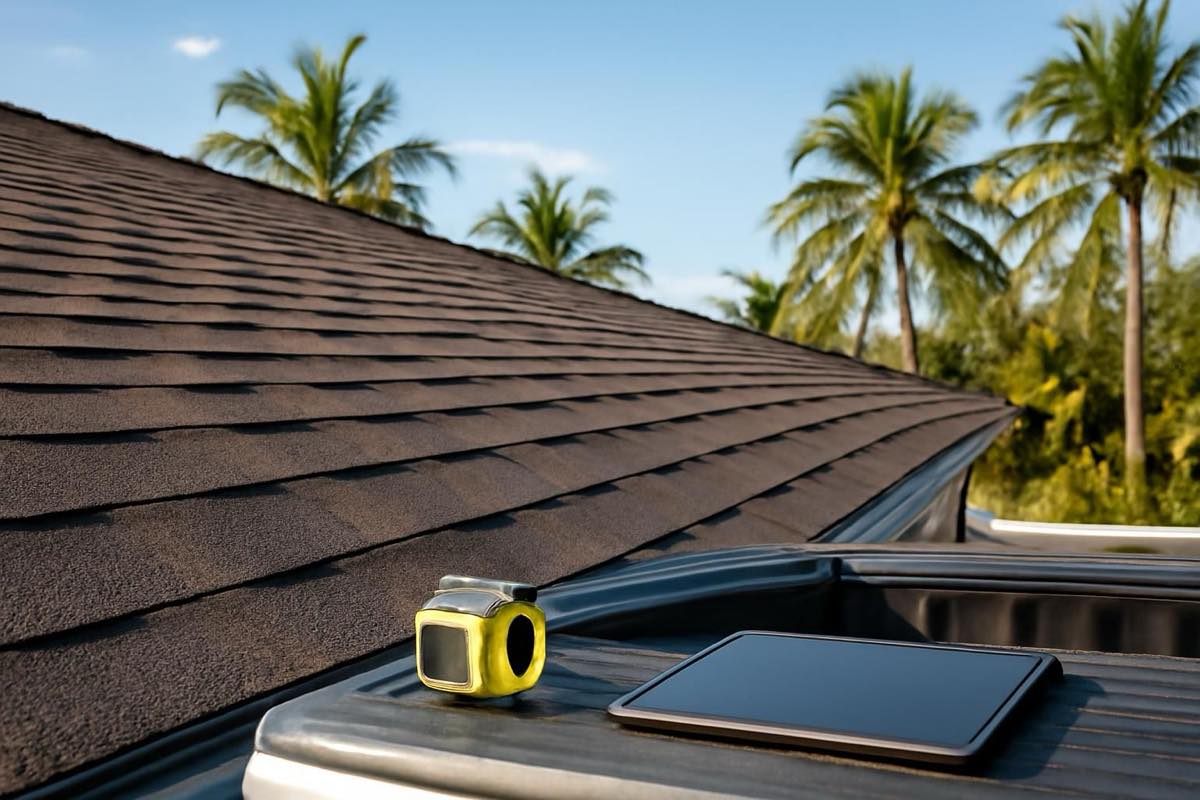
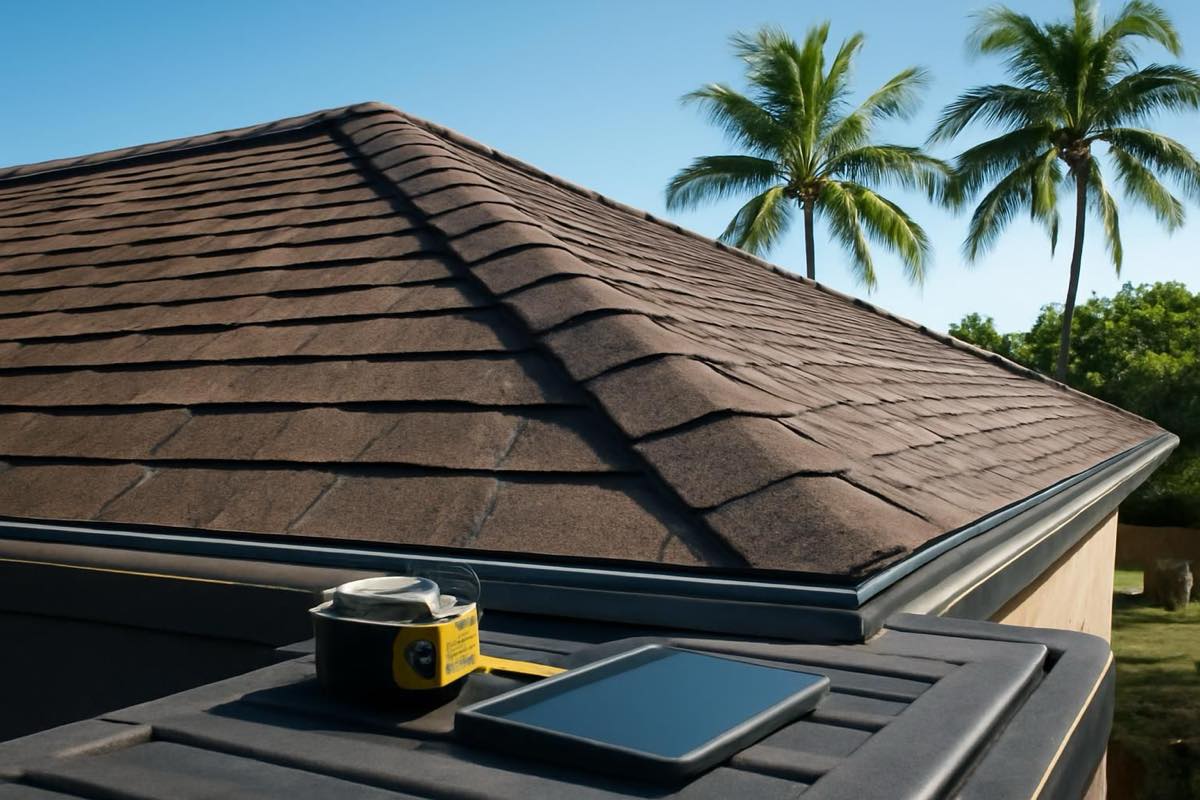
- Structured photo documentation: Avoid haphazard photo dumps. Group photos logically. Pair wide-angle elevation views showing site access with tight shots of damaged shingles, pitch gauges set firmly against roof decks, and tape measures resting against existing flashing and drip edge margins.
- Targeted price list data: Set your Xactimate database to the project’s specific metro area and the storm’s occurrence month. Mismatched regional lists create immediate discrepancies between Replacement Cost Value (RCV) and Actual Cash Value (ACV), prompting instant rejections.
- Overhead and profit (O&P) justification: If the scope requires coordinating multiple distinct trades—such as roofing, gutter replacement, exterior paint, and interior drywall—detail that general-contracting coordination directly in your trade schedule.
Submit the packet as a finalized PDF. Keep the raw .ESX file on standby, sending it over only if the desk adjuster specifically asks to merge your line items into their master file.
What should you not say when talking to an insurance adjuster about a supplement?
What you leave out of conversations with adjusters is just as important as your technical scope:
- Do not interpret policy: Never debate policy wording, offer legal takes, or discuss deductible concessions. You are a construction expert, not an adjuster.
- Do not attack the field adjuster: Calling an initial estimate "cheap" or "unacceptable" puts the desk adjuster on defense. Field adjusters miss things during storm surges; treat the omission as an oversight, not an insult.
- Do not rely on informal phone promises: If a phone adjuster approves an extra five squares or a step flashing line item, follow up immediately by email. If it isn't documented in the claim notes alongside your photo evidence, it won't appear on the revised check.
Anchor every call and email to physical conditions. Say: "Manufacturer specifications require dedicated starter shingles along eaves and rakes, totaling 240 LF. The initial scope only accounted for field shingles, so we updated the estimate to reflect those linear materials."
How does Storm Xactimate handle this for you?
Storm Xactimate creates carrier-ready Xactimate roof scopes for residential contractors handling storm losses. Upload your project details, site photos, and whatever initial adjuster documents or measurement data you have. If you lack a report from EagleView, Hover, or GAF QuickMeasure, Storm Xactimate supplies one as part of the service. An experienced storm-damage estimator then compiles every line item using the correct regional price list.
Within 24 hours of receiving complete order files, you get a custom-branded estimate PDF with full roof diagrams and mapped photo pages. Essential code items—including drip edge, starter courses, valley underlayment, and applicable O&P—are integrated directly into the scope. Should the insurer push back, upload the adjuster’s notes within 30 days of delivery to trigger an included revision round. Start an estimate with Storm Xactimate.
Frequently Asked Questions About Roof Claim Supplements
How does a supplemental insurance claim work?
A supplement is an addendum to the original claim scope. When a contractor identifies storm damage, omitted building code requirements, or measurement shortages during scoping or tear-off, they detail those differences in an Xactimate scope. Backed by site photos and aerial reports, the packet is submitted to the carrier desk adjuster for review and pricing reconciliation before or during the build.
How do I make a successful roof leak insurance claim supplement?
Zero in on water intrusion and concealed decking rot. As soon as shingles are pulled, take close photos of deteriorated sheathing, compromised framing, and soaked underlayment, alongside tape measures that show the damaged dimensions. Add Xactimate lines for sheathing replacement (RFG DRY) alongside interior painting or drywall repairs to secure coverage.
When should a roofing contractor submit the supplement?
Submit the supplement packet prior to tear-off if discrepancies involve perimeter runs, starter strips, pitch adjustments, or square counts. If tear-off exposes hidden issues like rotted decking or cracked rafter tails, take immediate photos, send the added line items straight to the adjuster, and pause work on that section until documentation is logged.
Does the carrier pay overhead and profit on residential roofing?
Carriers pay General Contractor Overhead and Profit (10 & 10) when work requires multi-trade coordination or complex scheduling. While single-trade, basic shingle swaps routinely face O&P pushback, jobs integrating roofing, trades like seamless gutters, exterior siding, stucco, or interior water repairs qualify when properly documented in the estimate.